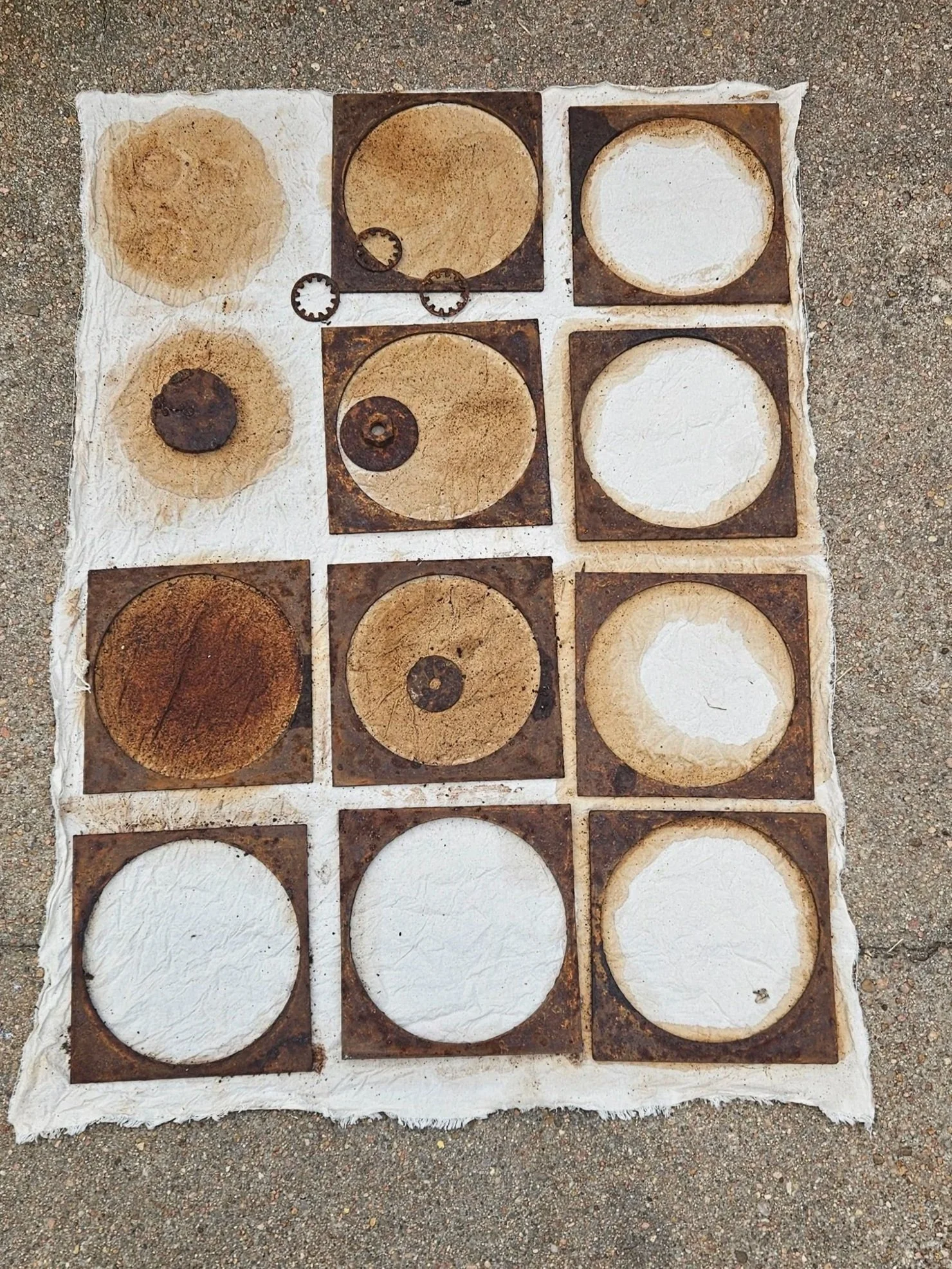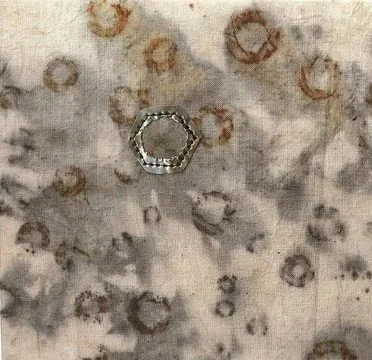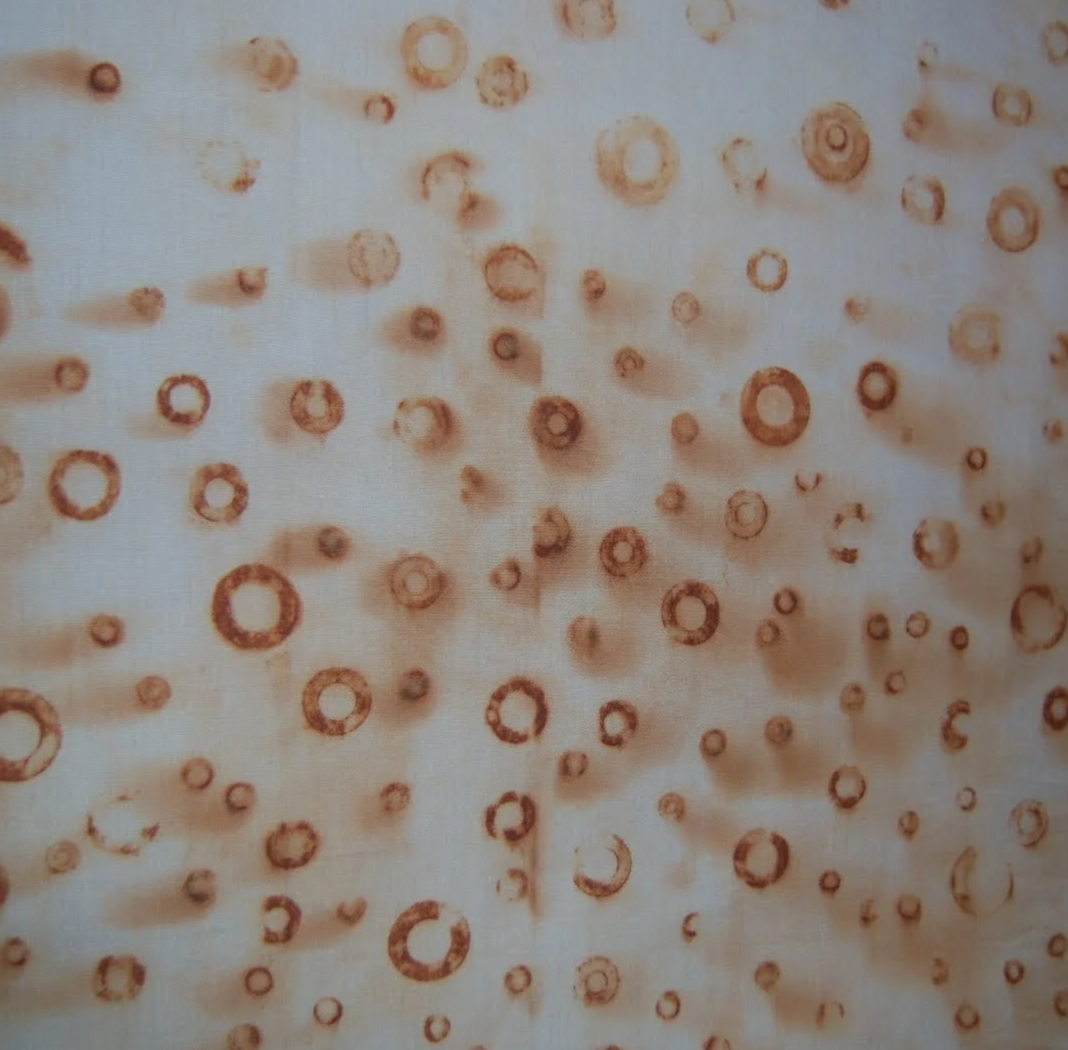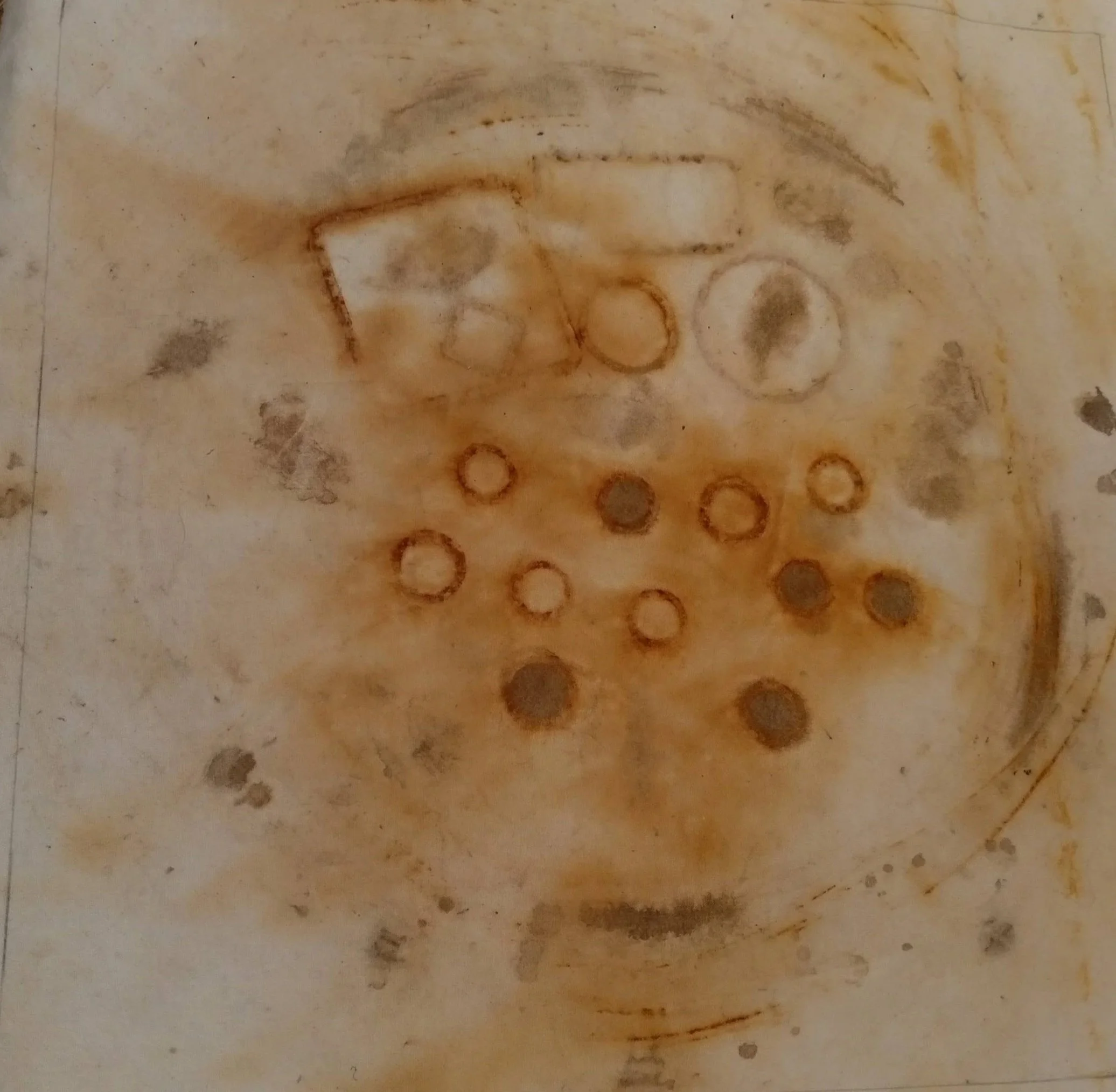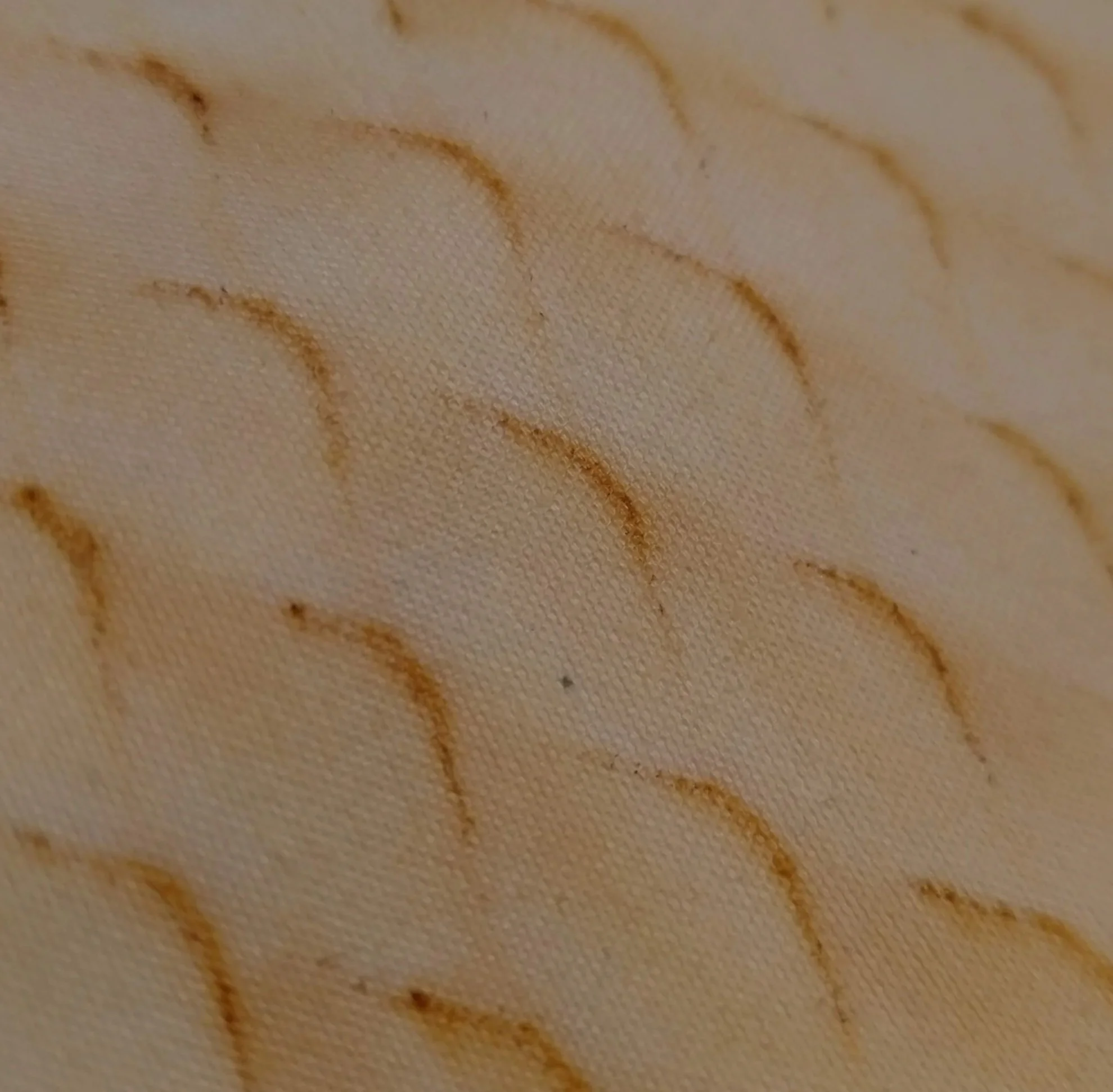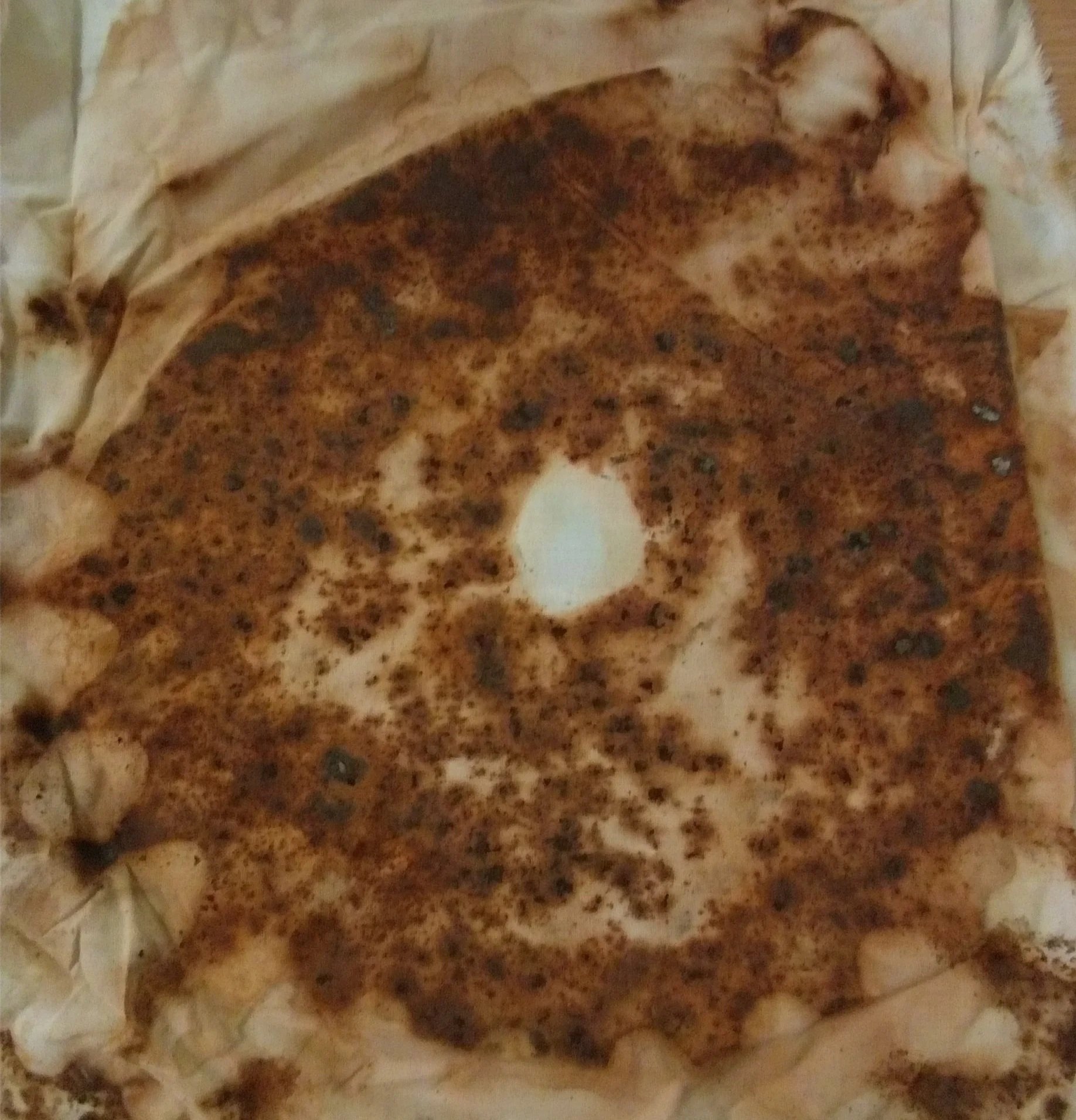
Transform ordinary white cotton into rich, vintage-toned textiles using the natural alchemy of iron, tannins, and acid. This kit uses a classic historical dyeing process to create organic, weathered patinas with deep blacks, warm browns, and earthy rusts.
Step 1: Prep and Scour the Fabric
New cotton fabric often comes coated with invisible manufacturing finishes, oils, or starches (sizing) that block natural dyes and iron from bonding properly.
Wash or rinse your 2 pieces of cotton fabric in a bowl of warm water using a small amount of soapy water (a few drops of mild dish soap or laundry detergent).
Rinse the fabric thoroughly with clean water to remove all soap residue, and leave it damp.
Step 2: Mix the Activator Spray
Fill your spray bottle with a 2:1 water-to-vinegar ratio (for example, 1 cup water mixed with 1/3 cup vinegar).
The acid in this mixture lowers the pH, helping to break down the iron oxide on the metal and activate the tea's tannins.
Step 3: Lay Down the Botanical Base (optional)
Lay your first piece of damp, pre-cleaned cotton fabric flat on a protected surface (plastic sheeting or a tray).
Open up or tear the black tea bag, and scatter the tea leaves directly across the surface of the fabric. Press them into the damp cloth so they stick, creating speckled shadow prints as the tannins release. The empty paper tea bag will take up the dye as well if you want to experiment.
Step 4: Apply the Rusted Metal
Arrange your rusted metal pieces directly on top of (or rolled inside) the tea-leaf-and-fabric layers.
Give the metal, leaves, and fabric one final, thorough misting with the vinegar solution to ensure strong chemical contact.
Optional: If you want wrapping patterns, tightly roll the fabric up with the metal and tea leaves inside, or fold it accordion-style.
The Oxidation Process (The "Wait")
Seal your damp fabric inside a plastic bag or cover it with a plastic sheet to trap the moisture, then let it sit undisturbed in a warm spot for 24 to 48 hours. As the iron rust reacts with the acid and wet tea tannins, a chemical coordination complex forms, allowing you to watch as deep charcoals, amber rusts, and bruised purple-grey tones emerge where the metal and tea leaves touch the cotton (just keep an eye on it to ensure it stays damp rather than bone-dry, without letting it sit long enough to mold).
Step 7: Reveal, Neutralize, and Set
Carefully unwrap your fabric and brush or shake off the loose tea leaves and metal pieces. Neutralize: Rinse the fabric thoroughly in cold water. Soak it briefly in a mild water-and-baking-soda solution (about 1 tablespoon of baking soda to a bowl of water) to neutralize any remaining acid and lock the fibers. Wash: Hand wash your dyed cotton using a gentle soap, then hang it up to dry out of direct sunlight.